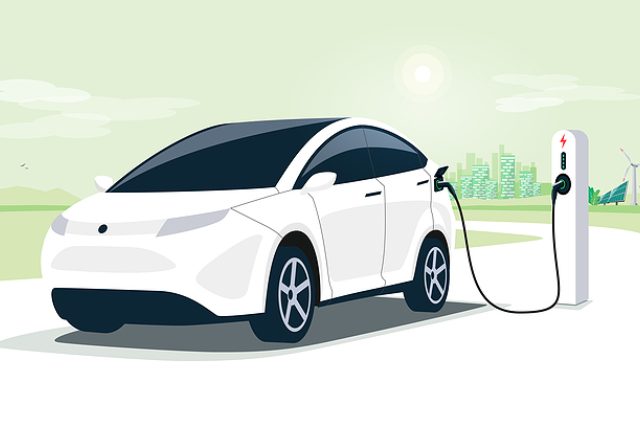
The hum of a silent engine gliding through the streets of Orchard Road is becoming an increasingly common soundtrack to Singapore’s urban landscape. As you walk past the rows of cars at a traffic light, you’ll notice more green license plates and the distinctive futuristic silhouettes of Teslas, BYDs, and Hyundais. Singapore’s “Green Plan 2030” is in full swing, with a clear mandate: to phase out Internal Combustion Engine (ICE) vehicles in favor of cleaner energy models by 2040.
But for the average Singaporean household, the decision to go electric isn’t just about saving the planet—it’s about the wallet. In the most expensive city in the world to own a car, every cent counts. With COE prices remaining volatile and the “Green Premium” still attached to many EV models, the burning question remains: Is an Electric Vehicle (EV) truly worth the price tag in Singapore?
In this comprehensive guide, we’ll break down the upfront costs, the hidden savings, the infrastructure hurdles, and the financial reality of making the switch.
The Upfront Cost: Facing the Sticker Shock
It is no secret that buying a car in Singapore is a massive financial undertaking. When you factor in the Open Market Value (OMV), Additional Registration Fee (ARF), and the ever-looming Certificate of Entitlement (COE), the price of even a “budget” car can make your eyes water.
EVs generally have a higher OMV than their petrol-powered counterparts due to the high cost of battery technology. For many buyers, the initial downpayment is the highest hurdle. Occasionally, when unexpected administrative fees or immediate car-related expenses arise during a transition period, some might look for a fast cash loan to bridge the gap; however, the long-term purchase of an EV requires a much more robust financial strategy.
The Government “Discounts”
To level the playing field, the Singapore government offers two primary incentives that can significantly slash the upfront price:
1. EV Early Adoption Incentive (EEAI): This provides a rebate of 45% off the ARF, capped at $15,000.
2. Vehicular Emissions Scheme (VES): Depending on the efficiency of the EV, you can receive an additional rebate of up to $25,000 (Band A1).
Combined, these incentives can knock up to $40,000 off the price of an EV. This often brings the price of a mid-range EV (like a BYD Atto 3) very close to a traditional ICE car (like a Toyota Corolla Altis). However, while the gap is narrowing, the EV usually still commands a slight premium.
Running Costs: Where the EV Shines
If the upfront cost is the “pain point,” the running cost is the “pleasure point.” This is where EV owners start to see a return on their investment.
Charging vs. Petrol
The most immediate saving is at the “pump”—or rather, the plug. With petrol prices hovering around $2.80 to $3.50 per litre, fuelling an ICE car is a significant monthly drain. In contrast, charging an EV is remarkably cheaper.
If you have access to a home charger (typically in landed properties or certain condominiums), you are paying residential electricity rates. Even if you rely on public charging stations like SP Group or Shell Recharge, the cost per kilometre is roughly one-third to one-half that of a petrol car. For a driver who covers 15,000km a year, the savings can amount to over $2,000 annually.
Maintenance: Fewer Moving Parts
Think about a traditional engine: it has hundreds of moving parts, from pistons and valves to timing belts and spark plugs. All of these require lubrication, cleaning, and eventual replacement.
An electric motor, by comparison, is incredibly simple. There are no oil changes, no air filters for the engine, and no complex exhaust systems. Furthermore, EVs use regenerative braking, which uses the motor to slow the car down, significantly reducing wear and tear on your brake pads. Over five years, an EV owner can expect to save thousands in servicing costs compared to an ICE owner.
The Hidden “EV Tax”: Road Tax and ARF Floor
It isn’t all sunshine and savings. Singapore’s road tax system for EVs is slightly different. Because the government loses out on the fuel excise duty (the tax built into the price of petrol) when you switch to electric, they have implemented an “EV Road Tax” to compensate.
EV road tax is calculated based on the Power Rating (kW). Additionally, there is an “Additional Flat Component” (currently $700 per year) applied to all fully electric cars. In many cases, the road tax for a high-performance EV (like a Tesla Model 3 Performance) can be significantly higher than a 1.6L petrol sedan. It is vital to factor this recurring cost into your yearly budget.
The Infrastructure Reality: Can You Charge It?
For an EV to be “worth it,” it has to be convenient. Singapore is rapidly expanding its charging network, with a goal of 60,000 charging points by 2030. Currently, most HDB car parks are being fitted with slow-charging (AC) points, which are perfect for overnight charging.
However, if you live in an older condo without charging lots, or if you are a “road warrior” who drives long distances daily, “range anxiety” might still be a factor. While Singapore is small enough that you can’t really “run out” of juice, the time spent waiting for a fast charger (DC charging) can be a hidden cost in terms of productivity and convenience.
Resale Value and Battery Longevity: The Great Unknowns
In the Singapore car market, most people usually sell their cars after 5 to 7 years. Because the EV market is relatively young here, the resale data is still thin.
A major concern for second-hand buyers is battery degradation. While most manufacturers offer an 8-year or 160,000km warranty on the battery, the perception of a “dying battery” could hurt the resale value of your EV more than a well-maintained petrol engine would. As technology improves, this fear is diminishing, but it remains a variable that makes the total cost of ownership harder to predict.
Determining Your Budget: How Much Should You Really Borrow?
Before you rush to the showroom, you need to look at the “Total Cost of Ownership” (TCO) rather than just the monthly instalment. Buying a car in Singapore is often an emotional decision, but it needs to be a clinical financial one.
When calculating your loan, it’s easy to look at the maximum allowable loan (usually 60-70% of the purchase price) and assume you can afford it. However, a responsible car owner needs to account for insurance (which is often higher for EVs), road tax, parking, and electricity.
A good rule of thumb is to look at how much you should really borrow based on your “DSR” (Debt Servicing Ratio). Your total monthly debt obligations—including your home loan and your new car loan—should ideally not exceed 35-40% of your gross monthly income. Over-extending yourself for a “green” car can lead to financial grey skies if your circumstances change.
The Verdict: Is It Worth It?
So, is the EV worth the price tag in Singapore?
The EV is worth it if:
- You drive more than 15,000km to 20,000km a year (higher mileage = faster “break-even” point).
- You have easy access to a charger at home or your workplace.
- You plan to keep the car for at least 7 to 10 years to fully reap the maintenance and fuel savings.
- You value the driving experience (instant torque, quiet cabin, and high-tech features).
The EV might NOT be worth it if:
- You are a low-mileage driver (the petrol savings won’t offset the higher upfront cost).
- You frequently change cars every 3 years (resale uncertainty).
- You live in a residence where charging is difficult or unavailable.
Conclusion
The shift toward electric vehicles in Singapore is no longer a question of “if,” but “when.” As the government continues to refine incentives and the charging infrastructure blankets the island, the financial argument for EVs becomes stronger every day. However, as with any major life purchase, the key to a stress-free experience is sound financial planning.
Transitioning to a greener lifestyle shouldn’t mean going into the red. By understanding the true costs—from the ARF floor to the monthly electricity bill—you can make a choice that is as good for your bank account as it is for the environment.
If you find yourself needing financial flexibility during your car-buying journey—whether it’s for a sudden repair, an insurance premium, or bridging costs—SG Licensed Money Lender is here to help. We provide transparent, reliable financial solutions tailored to your needs, ensuring that your journey toward a sustainable future is on solid ground.