The act of slipping a ring onto someone’s finger is a timeless gesture of love and commitment. But while the symbolism is almost universally understood, the customs surrounding which finger – or even which hand – the ring belongs on can vary depending on culture, tradition, and personal preference.
In Singapore, a country where East meets West, ring-wearing traditions are a delightful mix of both worlds. While most Singaporeans follow the Western practice of wearing their engagement and wedding rings on the fourth finger (often called the “ring finger”), many are still unsure whether it should be on the left or the right hand. If you’re wondering which finger to wear your engagement ring and wedding ring on, you’re not alone. Let’s explore the history, meaning, and modern considerations behind this age-old ritual.
Why the Fourth Finger?
The custom of placing rings on the fourth finger dates back to ancient times. The Romans believed that this finger housed the vena amoris, or “vein of love,” which supposedly ran directly to the heart. By placing a ring on that finger, lovers were thought to symbolically bind their hearts together.
Though modern anatomy has since debunked the idea of a single, exclusive vein connecting that finger to the heart (all fingers have similar venous connections), the tradition persists. It’s a poetic notion, and it still resonates with many couples today.
In Western cultures, the left hand became the standard for wedding and engagement rings. Singapore, having inherited British colonial influence and now shaped by global trends, has largely adopted this tradition. However, this isn’t a hard rule.
In countries like Poland, Ukraine, Denmark, and Austria, the right hand remains the preferred choice. And in multicultural Singapore, both approaches are embraced. Some couples choose the left hand for romantic symbolism, while others align with family or cultural norms that favour the right. What’s important is that the choice feels meaningful to you.
Engagement Ring vs. Wedding Band: Which Goes First?
Once you’ve figured out which hand to wear your rings on, another question often follows: what’s the correct order – engagement ring first, or wedding band?
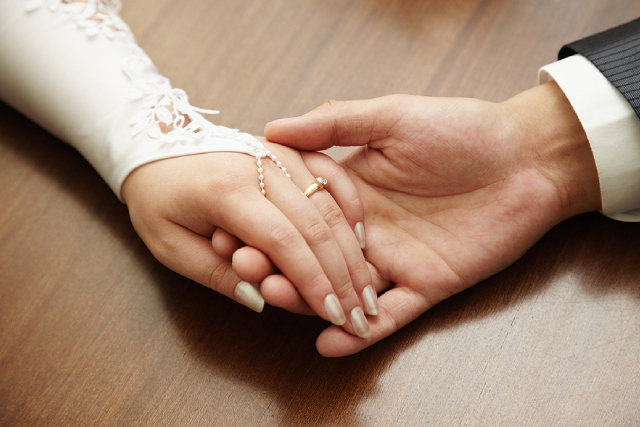
Traditionally, the engagement ring is given first, worn on the fourth finger of the left hand after a proposal. During the wedding ceremony, the wedding band is slid onto the same finger, often beneath the engagement ring. This order represents the journey from intention, symbolised by the engagement proposal, to the lifelong commitment that marriage represents.
But traditions can be flexible. Some brides choose to move their engagement ring to their right hand during the ceremony to make space for the wedding band, then return it afterwards. Others prefer to keep the wedding ring closest to the heart, stacking the engagement ring above it.
There’s no one-size-fits-all approach. In fact, many couples rework both rings into a single design after the wedding, merging symbols of proposal and marriage into one meaningful piece. It’s also increasingly common for couples to wear one ring on each hand, such as the engagement ring on the right and the wedding band on the left, depending on what feels most comfortable or culturally appropriate.
For couples considering ring purchases or upgrades, especially around milestone events, managing finances wisely becomes part of the process. If you’re looking for wedding loans with low interest, it’s worth comparing options between banks and trusted licensed money lenders in Singapore – some lenders may offer more flexible terms tailored for couples planning their big day.
Wearing Rings on Different Fingers (Or Hands)
Not every engagement ring is designed to sit neatly beside a wedding band. Rings with high-set stones, for instance, may not stack well with a band, leading some to wear them on different fingers or hands. This choice is perfectly acceptable and increasingly stylish.
Some people prefer to wear only their wedding band daily, keeping the engagement ring for formal occasions. Others rotate between rings based on practicality. For example, a ring with a large gem might not be ideal for everyday use, especially during hands-on activities like cooking, typing, or childcare.
If comfort or lifestyle factors lead you to wear your rings separately or even just one of them, that’s completely valid. The most important thing is that your rings feel right for you.
Ring-Wearing Tips for Daily Comfort and Style
Wearing engagement and wedding rings should never feel like a chore. Here are a few practical tips to ensure your rings match both your lifestyle and your aesthetic:
- Think practicality: If your job involves working with your hands, a high-set engagement ring might not be the best fit. A simple, low-profile band could be a smarter daily choice.
- Choose the right materials: Platinum and titanium are popular for their durability and resistance to wear. Gold is a timeless option, though softer in higher karats. For sensitive skin, hypoallergenic metals are worth considering.
- Plan for stacking: If you intend to wear both rings together, it’s wise to choose designs that nest well. Many jewellers offer matching sets or can create a custom contour to fit around your engagement ring.
- Be flexible: It’s okay to adapt over time. Silicone rings are great for travel or workouts. Some couples later combine their bands into one ring to mark an anniversary or life change. The way you wear your rings can evolve along with your relationship.
Conclusion
There’s no single rulebook when it comes to wearing engagement and wedding rings. Whether you prefer the symbolism of the left hand, the cultural weight of the right, or a completely personal configuration, your choice should be one that feels authentic and comfortable.
In Singapore’s diverse cultural landscape, tradition is just one part of the equation – your lifestyle, values, and preferences matter just as much. What truly counts is the love the rings represent, no matter where they’re worn.